
Polish Art at the 2026 Venice Biennale: A Significant Presence Across Pavilions and Programs
On May 9, 2026, the 61st International Art Exhibition of La Biennale di Venezia opens in Venice. This year’s edition includes a significant Polish presence, with projects by Polish artists and curators presented across three national pavilions as well as within the official collateral program – from the Polish Pavilion in the Giardini to exhibitions in the historic heart of the city.
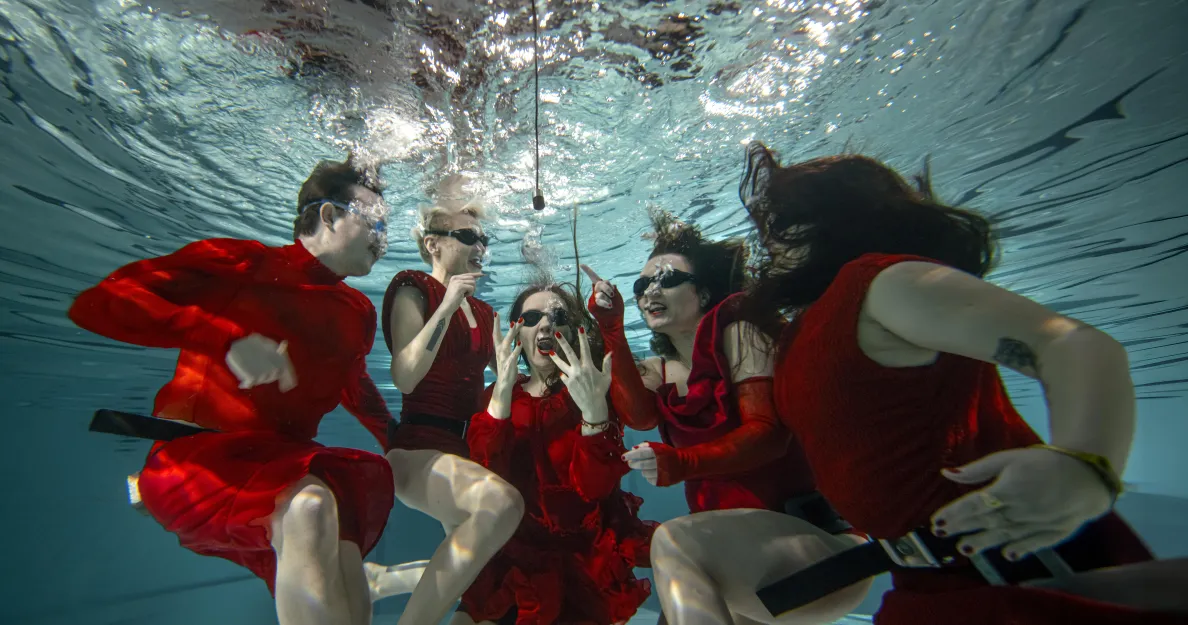
At the Polish Pavilion, organized by Zachęta – National Gallery of Art, visitors will see “Liquid Tongues”, an immersive audio-visual installation by Bogna Burska and Daniel Kotowski. The work is developed in collaboration with the community-based Choir in Motion (Chór w Ruchu), composed of both hearing and Deaf participants.
Polish voices will also resonate across other national pavilions. Natalia Sielewicz will curate the Estonian Pavilion, while Małgorzata Ludwisiak will oversee the Albanian Pavilion – further underscoring the breadth of Poland’s curatorial influence on the international stage.
Within the Biennale’s official collateral program, the Starak Family Foundation will present an exhibition dedicated to the artistic relationship between Tadeusz Kantor and Maria Jarema – key figures of the Polish postwar avant-garde.
This year’s Biennale unfolds within an especially complex political context, highlighting how deeply art is embedded in broader global conversations, notes Olga Wysocka, Director of the Adam Mickiewicz Institute. The presence of Polish artists and curators – and their distinct voices shaping this dialogue – is all the more significant. Such a strong representation confirms Poland’s lasting position within the international art circuit.
Exploring Alternative Languages in the Polish Pavilion
“Liquid Tongues” places communication at its core, exploring language as a shared system that extends beyond speech. Sign languages and non-human forms of communication – such as whale song – are treated as equal modes of expression.
For many within the Deaf community, there remains a belief that recognition and success primarily belong to the hearing, while we are left with only marginal space – says Daniel Kotowski, a visual artist and performer. This project reverses that perspective – within the aquatic environment, it is the hearing who lose their communicative advantage.
The project draws inspiration from Roger Payne’s landmark 1970 recordings “Songs of the Humpback Whale”, which played a key role in raising awareness about whale communication and by revealing the complexity of non-human communication ultimately contributed to the global ban on whale hunting.
Set both underwater and above the surface, the installation features collective scenes and dialogues performed by artists and choir members, constructing a narrative through sound and movement. The story unfolds through choral compositions performed vocally and in sign language.
Curated by Ewa Chomicka and Jolanta Woszczenko, the “Liquid Tongues” exhibition continues the programme of the Polish Pavilion, organized by Zachęta for over 70 years.
Polish Curators Lead Estonian and Albanian Pavilions
The Estonian Pavilion, “The House of Leaking Sky”, curated by Natalia Sielewicz will feature a live painting process by Merike Estna. Internationally acclaimed, Estna treats painting as a living, time-based process. Over the course of the exhibition, she will create works in the presence of visitors, gradually transforming blank canvases into a unified, large-scale installation of twenty-two panels.
Meanwhile, Małgorzata Ludwisiak curates the Albanian Pavilion’s “A Place in the Sun”, featuring a three-channel video installation by artist Genti Korini. Combining acting, puppetry, animation, and an original soundscape, the work takes the form of a fictional performance staged in Zaum – an experimental language developed by early twentieth-century Russian Futurist poets. Conceived as a “pure language” without grammar or syntax, Zaum functions here as a device to confront us with the unknown.
Kantor and Jarema in the Heart of Venice
At the historic Procuratie Vecchie on St. Mark’s Square, the Starak Family Foundation will present “Tadeusz Kantor (1915–1990). Emballage, Cricotage and Madame Jarema” as an official collateral event of the Biennale. This marks the foundation’s fifth presentation of Polish art in Venice.
Curated by Ania Muszyńska, the exhibition explores the artistic dialogue between Tadeusz Kantor and Maria Jarema, whose relationship significantly shaped the evolution of Kantor’s practice. It features key works from Kantor’s oeuvre, including his informel compositions from the late 1950s and early 1960s, his emballages, and late painting cycles such as “Further On, Nothing” and “I’m Goddamn Falling”. The display is complemented by original theatrical objects, stage props, and the film “Attention, Painting”, offering insight into his creative process.
Jarema’s work forms an integral part of the exhibition. A painter, sculptor, and co-founder of the Cricot and Cricot 2 Theatre, she is represented through her monotypes and reconstructed costumes from early performances such as “Cuttlefish” and “Circus”.
The 61st International Art Exhibition of La Biennale di Venezia will run from May 9 to November 22, 2026
Polish Presence at the Venice Biennale – Practical Information
Polish Pavilion
- Exhibition: “Liquid Tongues”
- Artists: Bogna Burska, Daniel Kotowski
- Organizer: Zachęta – National Gallery of Art
- Curators: Ewa Chomicka, Jolanta Woszczenko
Estonian Pavilion
- Curator: Natalia Sielewicz
- Exhibition: “The House of Leaking Sky”
- Artist: Merike Estna
Albanian Pavilion
- Curator: Małgorzata Ludwisiak
- Exhibition: “A Place in the Sun”
- Artist: Genti Korini
Accompanying Program
- Organizer: Starak Family Foundation
- Exhibition: “Tadeusz Kantor (1915–1990). Emballage, Cricotage and Madame Jarema”
- Location: Procuratie Vecchie, Venice
- Artists: Tadeusz Kantor, Maria Jarema