Droga Dō – A Musical Trail of Memory from Lithuania through Poland to Japan
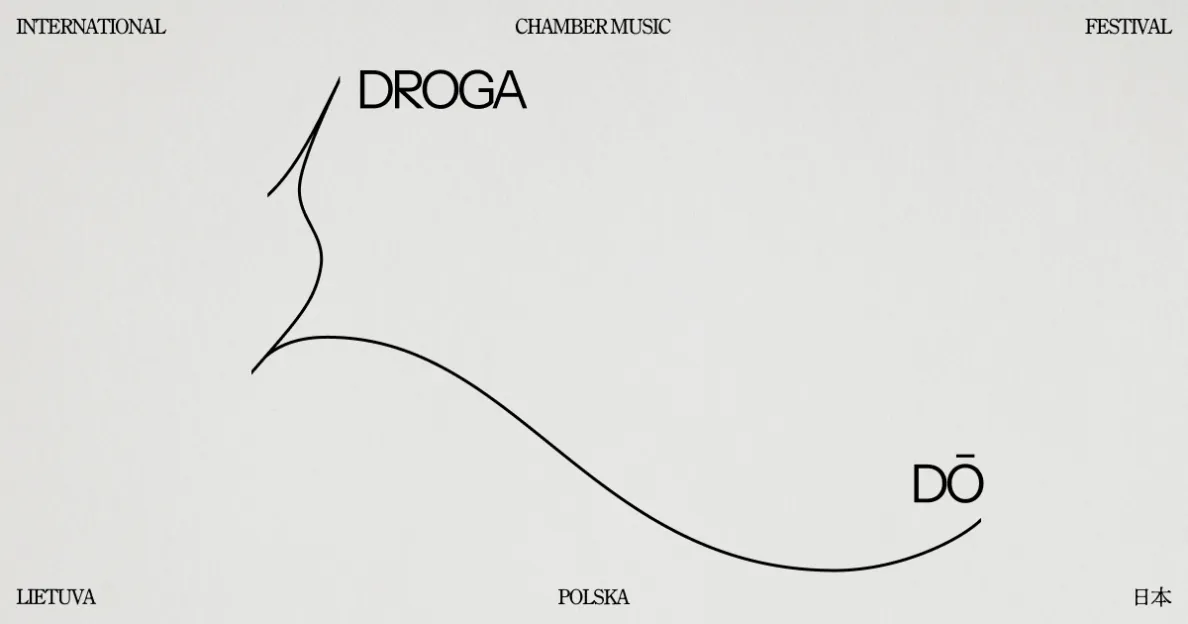
The second edition of the Droga Dō International Chamber Music Festival is under way. The festival combines contemporary music with the story of one of the lesser-known episodes of the Second World War – the history of Jewish refugees who found a path to safety thanks to the help of diplomats from Japan, the Netherlands and Poland. Running from 18 September to 14 December 2026, the festival features concerts, film screenings and audiovisual installations in Kaunas, Warsaw, Tsuruga and Tokyo. The Adam Mickiewicz Institute is a partner of the festival.
The festival was conceived by flautist Ania Karpowicz, and its concept is based on a play on words that links the Japanese dō, meaning a road or path, with the musical do – the first note of the scale. This symbolic journey leads through places connected with the wartime fate of several thousand European Jews who managed to escape the Holocaust via Lithuania and the Soviet Union to Japan, and from there on to other countries.
At the heart of this story are three figures: Japanese consul Chiune Sugihara, Dutch consul Jan Zwartendijk and Polish ambassador to Japan Tadeusz Romer. Thanks to their cooperation and commitment, thousands of people received documents that enabled them to leave war-torn Europe. Droga Dō recalls this history, while also offering a contemporary reflection on responsibility, solidarity and our attitude towards people forced to leave their homes. Here, music becomes a way of telling stories about the past across linguistic and cultural boundaries.
From Kaunas to Tokyo – Music on the Refugee Route
The festival opened on 18 September at the Sugihara House in Kaunas – the historic site where the Japanese diplomat issued life-saving visas to Jewish refugees. The opening programme included a screening of the documentary Visas for Life (Wizy życia, 1997), directed by Andrzej Miłosz and Piotr Weychert, and a presentation of the sound installation di rajze ahejm (2023), based on the poetry of Irena Klepfisz.
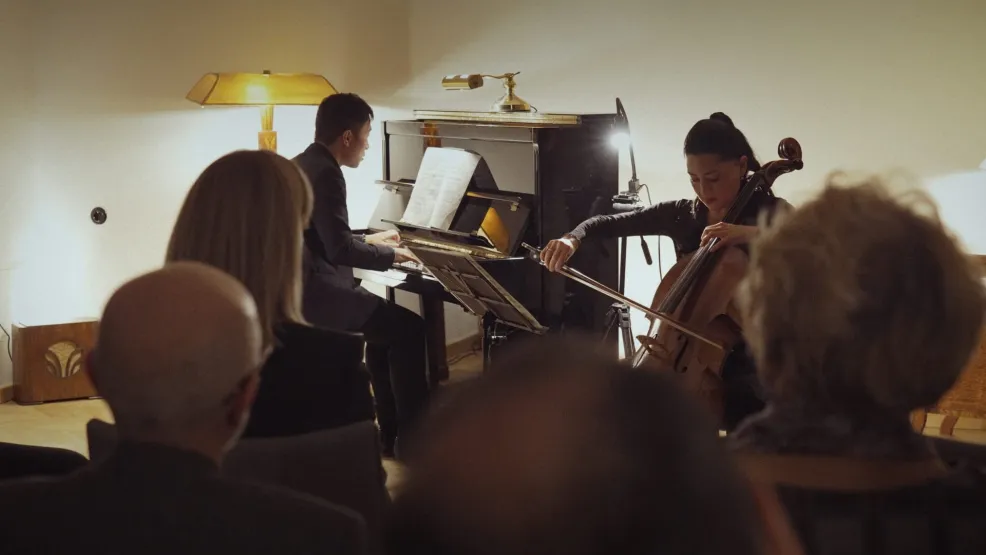
The following day, the Kaunas Philharmonic hosted the first of the festival’s two main chamber concerts. Naruhiko Kawaguchi (piano), Ania Karpowicz (flute), Alicja Kieruzalska (bassoon) and Gabriel Czopka (French horn) performed works by Polish, Japanese and Jewish composers, including Tōru Takemitsu, Dai Fujikura, Mieczysław Weinberg, Władysław Szpilman, Alexandre Tansman and Joseph Achron.
A highlight of the programme was the world premiere of shinsei (新生 – “new life”) by Aleksandra Kaca, the festival’s composer-in-residence. Commissioned specially for Droga Dō, the piece was created as part of the Composer Commissions programme run by the National Institute of Music and Dance. It will be performed again at the closing concert in Tokyo in December, linking the two main musical events of this year’s edition.
The Polish Chapter of the Festival – An Installation Between Sound and Image
On 14 November at 8:00 pm, an immersive audiovisual installation created by Polish-Japanese composer Nina Fukuoka and visual artist Aleksandra Ołdak will premiere online.
The project refers back to the festival’s prologue in December 2024, when the installation Droga Dō, based on a concept by Ania Karpowicz, was presented for the first time. Its new iteration develops the idea of storytelling through a combination of music, image and digital space, offering audiences an individual experience of memory. The installation will be available on the website droga-do.org.
The Japanese Finale of the Festival
The final part of the festival will take place in December in Japan, the destination reached during the Second World War by refugees using documents issued by European and Japanese diplomatic missions.
On 12 December, the Port of Humanity Tsuruga Museum will host a screening of the documentary Visas for Life, preceded by an introduction from Ania Karpowicz and Karol Tomoki Yamazaki, who is responsible for the festival’s visual identity. The event will be accompanied by a reading, in Japanese, of a letter by Piotr Weychert.
The closing concert will take place on 14 December at 7:00 pm at Theatre X (Kai) in Tokyo. The international ensemble will be joined by cellist Kristina Reiko-Cooper and horn player Łukasz Łacny. Alongside a second performance of Aleksandra Kaca’s shinsei, the programme will feature works by Fryderyk Chopin, Grzegorz Fitelberg, Tatsunosa Ikenouchi and other composers associated with the musical traditions of Poland, Lithuania and Japan. The concert will be accompanied by visuals by Aleksandra Ołdak and Karol Tomoki Yamazaki.
The festival is organised by oto fundacja, known for, among other things, WarszeMuzik – a chamber music festival that revives the memory of the history of the Warsaw Ghetto and its inhabitants. Droga Dō develops this idea on an international scale, using contemporary music as a tool for dialogue between history and the present.
Droga Dō – practical information
- Festival dates: 18 September – 14 December 2026
- Venues: Kaunas, Warsaw, Tsuruga, Tokyo
- 14 November, 8:00 pm: online premiere of the audiovisual installation by Nina Fukuoka and Aleksandra Ołdak, droga-do.org
- 12 December: screening of Visas for Life, Port of Humanity Tsuruga Museum, Tsuruga
- 14 December, 7:00 pm: closing concert, Theatre X (Kai), Tokyo
- Organiser: oto fundacja
- Partner: Adam Mickiewicz Institute (IAM)
- More information and full programme: www.droga-do.org